Ripstop Pants for Trekking
INDIAN SPORTS GEAR
SEO BLOG DRAFT
Why Ripstop Pants Are Ideal for Trekking and Outdoor Adventures
There's no doubt that every trekker knows the feeling when they get caught on a loose rock while climbing on a Himalayan trail or on thorny bushes during monsoon hikes through the Sahyadris and their pants start to tear. What initially seemed like a small tear can develop into a large one very quickly, and then the hiker will be unprotected from the cold weather, rain, and tough conditions for the rest of the hike.
This problem is exactly what ripstop fabric was invented to solve. Throughout our many years of supplying outdoor and tactical clothing to trekkers, defense forces, and adventure clothing stores across India, we've been witnessing firsthand how important it is to choose the right material for an outdoor excursion. And there is no doubt that ripstop pants have become a must-have equipment for any trekking enthusiast.
What Are Ripstop Pants and How Does Ripstop Fabric Work
Trekking and outdoor pants known as Ripstop are those pants whose material is woven using a specific weaving technique in which stronger threads are used at regular intervals. The stronger threads are either of stronger fiber than that of the remaining material or simply of the same material, though thicker than the other fibers.
The main objective of using this weave is very simple. If at any point, there happens to be any hole or tear in the material, the reinforcing grid acts as a barrier to prevent further tearing. In other words, instead of having a tear spreading from the initial cut into a one-foot hole, the tear remains restricted to a very small portion. This is exactly why it is called a 'ripstop'.
The material of ripstop pants is normally made of nylon, cotton, or polyester. Among these three, nylon ripstop material is the most popular choice for trekking pants while cotton ripstop blends are good in case of hot and humid conditions common in India.
Why Ripstop Pants Are Suitable for Trekking and Hiking
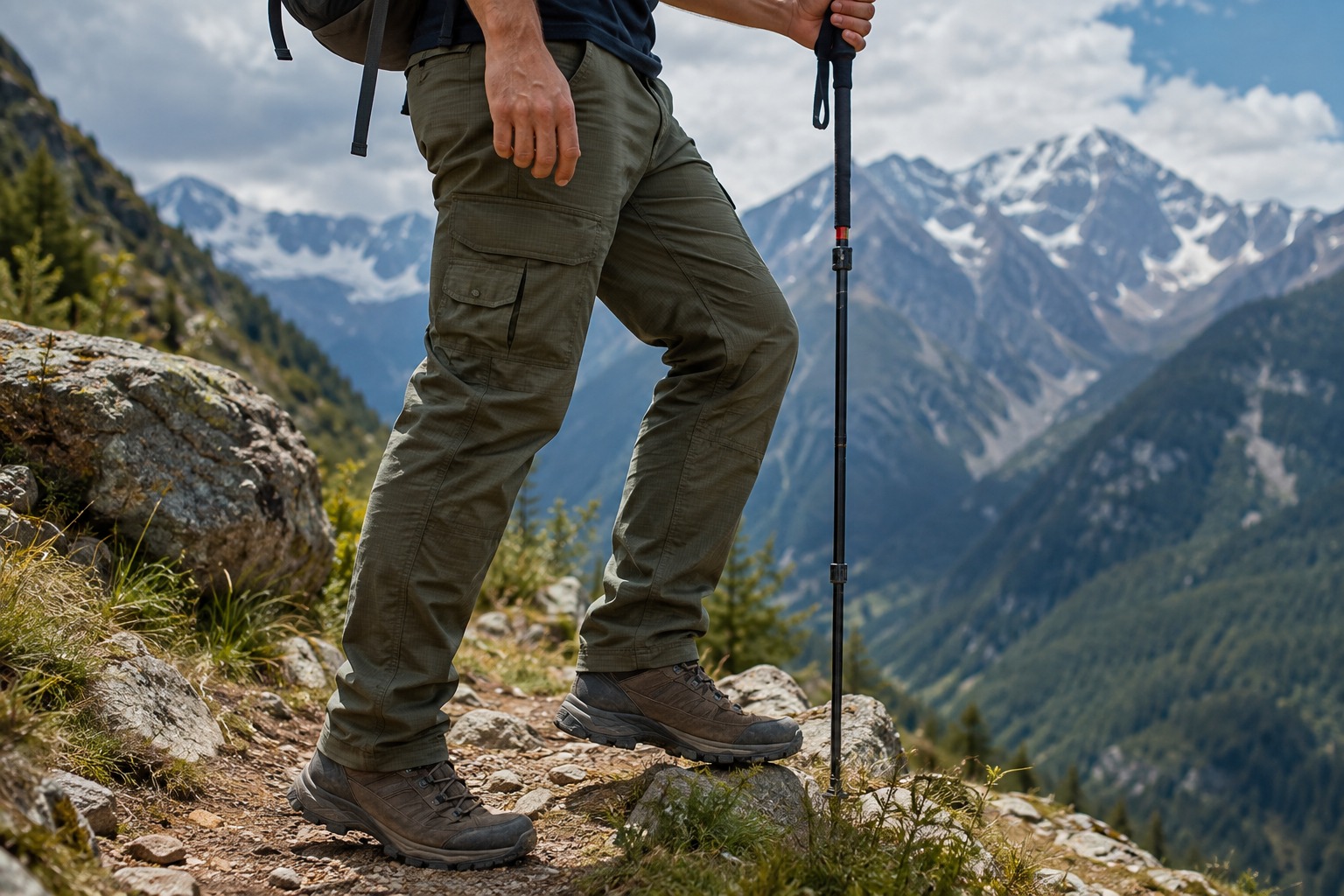
In fact, treks place requirements on clothing that are impossible for everyday clothes to fulfill. You will find yourself crawling between branches, sitting on rocks, kneeling to set up your camp, and rubbing against thorny shrubs hour after hour. Regular cotton and polyester trousers will quickly wear out and start tearing along the stress points such as the knees and buttocks after only a few treks.
It is precisely for this kind of treatment that ripstop trousers were made. Thanks to the reinforced weave, it is able to withstand minor cuts, abrasions, and snags without tearing all the way through and finishing your trek prematurely. That is how ripstop became the most common fabric for trekkers' as well as tactical trousers for the armed forces.
To those embarking on multi-day expeditions, mountain ascents, and trekking off trails in India — be it in Himachal and Uttarakhand, or in the Western Ghats — this toughness comes through in reduced equipment breakdowns and lower costs of replacing damaged pants each year.
Key Benefits of Ripstop Pants for Outdoor Use
Durability and Tear Resistance
This is the key advantage. The reinforced grid construction makes the ripstop fabric much stronger in terms of tear resistance than regular woven materials having equal weight. Practically speaking, this means that even if the fabric catches on some piece of rocks or thorns, there is little chance of tearing, which is extremely important if one is hundreds of miles from civilization.
Lightweight Comfort
Although this material is tough, it is not heavy. Ripstop trekking nylon is generally much lighter than denim or canvas. This is very important when hiking up hills since all the extra weight does matter.
Flexibility and Freedom of Movement
Trekking pants are made using articulated knee joints or using a stretch weave material so that you can perform the high-stepping or crouching that is needed when trekking — climbing boulders, wading through streams, or pitching a tent — without the material impeding your movement.
Breathability
Ripstop pants for trekking are made to be breathable so that one is able to regulate their sweat during long climbs. Many of them also have a water-resistant coating that does not affect breathability, ensuring comfort regardless of whether one is climbing or resting.
Quick Drying
The nylon ripstop material takes up very minimal amounts of water when compared to the cotton material, hence even if you happen to be in a situation where there is sudden rainfall at the top of a hill, the pants will dry up much more quickly.
Practical Pockets and Storage
Most trekking and cargo pants have various reinforced pockets – cargo pockets on the thighs, zippered pockets, and even designated pockets for a cell phone, compass, or trekking pass. It is more important than it seems; when hiking, you need your hands free and your belongings easily accessible rather than having to dig through your backpack to find them.
Ripstop Pants vs Regular Pants
| Feature | Ripstop Pants | Regular Trekking/Casual Pants |
| Tear resistance | High — reinforced grid stops tears from spreading | Low to moderate — tears spread easily once started |
| Weight | Lightweight, built for long treks | Varies; cotton and denim are noticeably heavier |
| Drying time | Fast, especially in nylon ripstop | Slow, particularly in cotton |
| Breathability | Good, designed for active movement | Depends on fabric; denim breathes poorly |
| Durability across seasons | Holds up over many treks | Wears thin at knees and seat over time |
| Best suited for | Trekking, hiking, tactical, outdoor work | Everyday casual wear, light outdoor use |
Ripstop Pants vs Tactical Pants
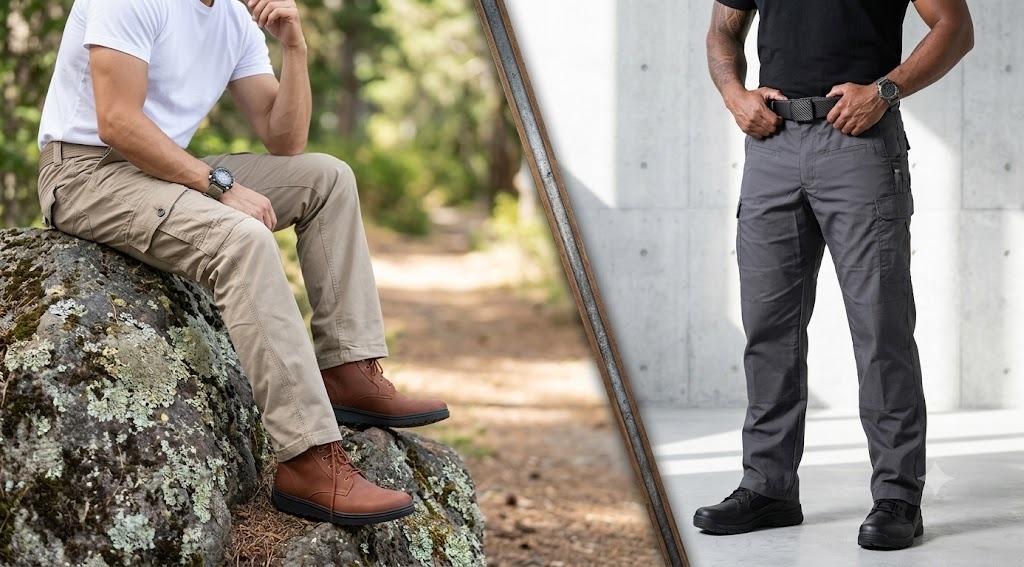
It is a point of confusion among new customers that needs clarification, tactical pants are a type of pants while ripstop refers to the material they are made of. While most tactical pants are ripstop pants, there is a difference between the two because ripstop pants may not be tactical.
The design of tactical pants revolves around the features they have including extra cargo pockets, reinforced knees and seat, adjustable waist, and sometimes MOLLE for carrying items such as magazines. This kind of pants is meant for military, law enforcement, or outdoor adventures that involve wearing a lot of items on the body.
As opposed to tactical pants, ripstop trekking pants are mainly designed for comfortable trekking, meaning they are lightweight and cut in a way to make trekking easy. They do not have much attachment that makes them heavier and their purpose is just to give maximum protection while trekking.
In short, while trekking, one will find it difficult to use a tactical pants because it is too heavy and does not allow enough room. For people who are engaged in sports such as airsoft, outdoor activities or need durable storage capacity, a tactical pants would be better.
How to Choose the Right Ripstop Pants for Trekking
However, selecting the right pair is a bit complicated and depends on many criteria instead of just a label:
- Material: It would be great if you can get a pair of nylon ripstop or nylon-cotton ripstop trousers. Drying faster and being more abrasion-resistant is the advantage of the former; while latter provides breathability and comfort for skin.
- Fit and cut: You need a pair that allows you to move freely. Knees should be articulated and a crotch gusset must be present so that you could easily wear thermals underneath while traveling during winter.
- Weight of the material: In summer trips and multi-day trekking (when you cannot have an additional weight in your backpack), light ripstop (150-200 GSM) would be the best choice; however, if you travel through rough terrain and conditions, heavier ripstop (above 220 GSM) would be great.
- Water resistance: In case you don't want extra weight from your pants, DWR coating would be helpful in unexpected rain and wet mornings.
- Position of pockets: They should not chafe when you are sitting or walking with your backpack using a hip belt.
- Waist and closures: Adjustability is a feature that becomes increasingly important after many miles of hiking than what may appear to be the case in a store.
- Stitching: Double stitching at critical places such as the insides of the thighs, crotch and edges of pockets is one of the best indicators of durability.
Why Ripstop Pants Work Well for Different Indian Outdoor Conditions
The varied nature of the terrain in India makes use of ripstop material ideal in most cases:
- High altitude treks in the Himalayas (Uttarakhand, Himachal, Ladakh, Sikkim): Rough, abraded terrain and extreme changes in temperature necessitate durability and rapid layering. Ripstop pants work well with rocks and provide easy layering over thermals.
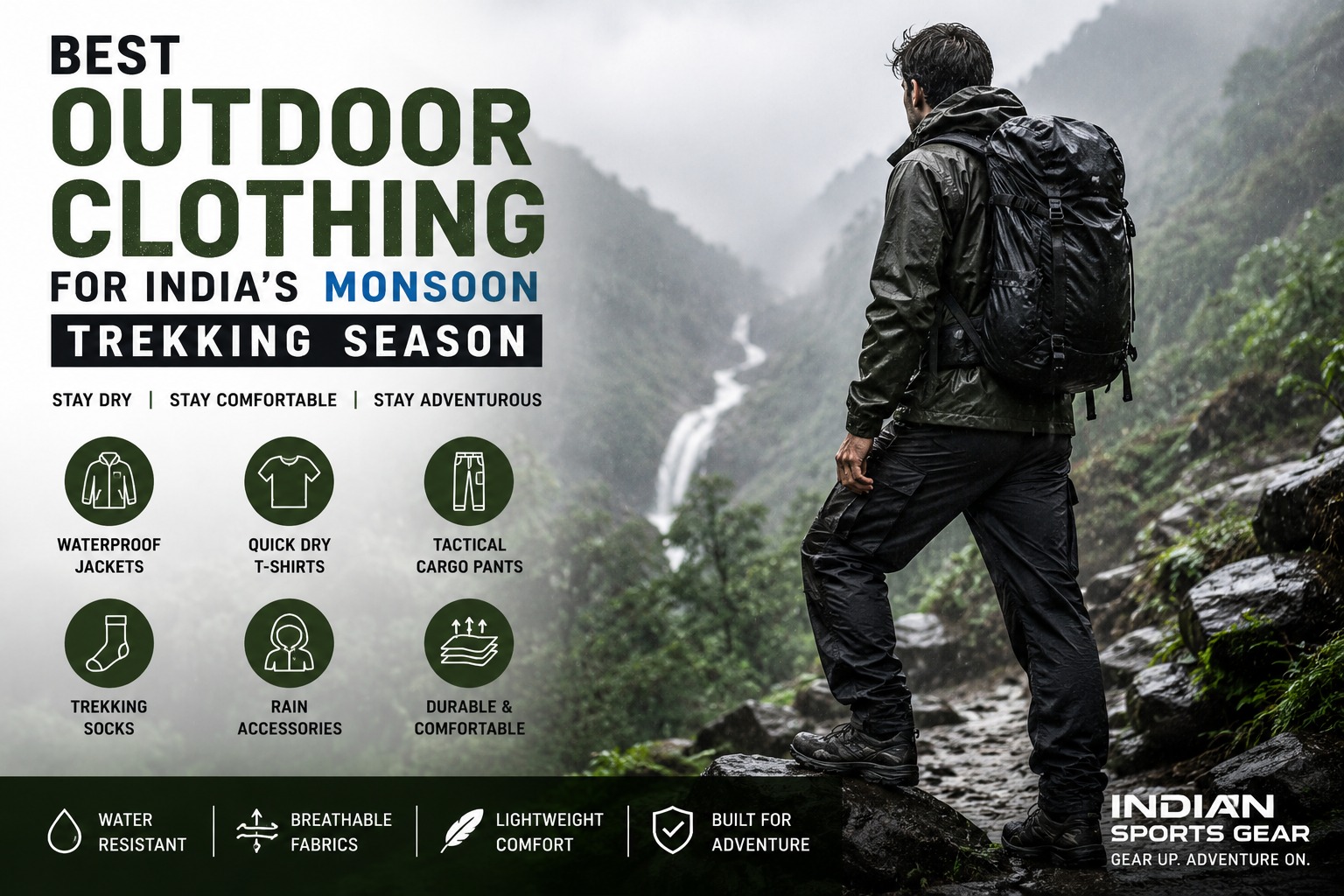
- Trekking through the monsoons (Western Ghats, Sahyadris): Moisture-laden, slippery terrain and thick forest vegetation requires fast drying and thorn resistant material, which is exactly what makes ripstop better than cotton in these conditions.
- Trekking in desert and arid regions (Rajasthan, Kutch): Ventilation as well as protection from dry shrub land is provided by breathable ripstop blends.
- Forest/jungle trekking (North East India, Central India): Thick forest/jungle and exposure to insects make tear resistant ripstop pants ideal over shorts or normal pants.
Best Ways to Use Ripstop Pants Beyond Trekking
While trekking stands out as the foremost application of ripstop pants, there are more uses for them when included in an outdoor gear pack:
- Hiking/Day treks: Light ripstop pants will be comfortable enough to hike without getting sweaty.
- Camping: Strong enough to set up tents, collect firewood, and sit down in the rough terrain without fear of getting ripped.
- Backpacking & Travel: Fast drying and easy maintenance make them ideal for traveling through multiple cities without access to washing facilities.
- Outdoors work & adventure sports: Rock climbing, off-roading, and fieldwork all take advantage of the tear-resistant material used in ripstop pants.
- Rugged clothing for everyday use: Today, many individuals prefer to wear cargo ripstop pants even as everyday clothing due to their durability.
Basic Care and Maintenance of Ripstop Pants
However, some tips will help you get the most out of ripstop pants:
- Wash them in your washing machine in cold or warm water but never use hot water that ruins the DWR treatment.
- Do not use fabric softeners since it may clog the fabric's breathability and lessen water resistance.
- Dry them outdoors when possible since ripstop pants with water-resistant properties should be air dried.
- Repair any small snags right away by sewing them with a needle and thread or a repair patch.
- Reproof the water-resistant coating from time to time using a DWR spray if you use ripstop pants often in wet weather.
- Keep pants dry and neatly folded in your trekking bag after a trip and never ball them up.
Frequently Asked Questions
Q. Are ripstop pants good for trekking?
Yes. Ripstop pants are the most suitable choice when trekking because of their strong weaving that prevents them from tearing due to rocks, thorns, and rough terrains, while remaining light and quick drying.
Q. What makes ripstop fabric different from normal fabric?
Ripstop fabric is made of thick reinforced yarns woven in a crosshatched grid formation to prevent tears and punctures from turning into bigger rips, unlike in woven fabrics.
Q. Is ripstop fabric waterproof?
The ripstop material itself is not entirely waterproof, but the trekking ripstop pants are usually treated with a water-repellent DWR coating that makes them resistant to light rain and moisture and also breathable.
Q. Can I wear ripstop pants in hot and humid weather?
Definitely yes, especially the nylon-cotton ripstop pants, which have been specially designed to be breathable and absorb sweat, hence ideal for the humid Indian environment during monsoons or lowland treks.
Q. Are ripstop pants and cargo pants the same thing?
Not necessarily; they are two different concepts. Ripstop pertains to the type of material while cargo pants are the design of pants, with additional pockets. The majority of cargo pants are ripstop pants.
Q. How long do ripstop trekking pants usually last?
As long as the ripstop trekking pants are well maintained, they can last you many years of trekking without needing to replace them.
Q. Are ripstop pants suitable for winter treks?
Not at all. Even though ripstop material is popularly used in the manufacture of military clothing due to its sturdiness, it is equally popular among civilians as a trekking material.
Q. What GSM is best for trekking ripstop pants?
The high-quality nylon ripstop will not shrink even after a wash at cold temperature and drying at normal temperatures. One should always refer to the label, as cotton ripstop may shrink slightly more than nylon ripstop.
Q. Do ripstop pants shrink after washing?
180-220 GSM ripstop will be ideal for trekking under Indian conditions, while lighter GSM material is suitable for summer and heavier GSM material is suitable for tough winter trekking.
Q. Are ripstop pants only for military or tactical use?
That's true, but only if worn in the correct order. Ripstop pants are an excellent outer material above the thermal innerwear, which will provide protection against wind and friction without being bulky.
Conclusion
Selecting appropriate trekking pants is not only about being comfortable for a single outing; it is about buying clothes that will last trek after trek and be able to endure different landscapes like Himalayan scree and monsoon-ravaged forest tracks. It's easy to see why ripstop material makes its way into trekking gear, as it addresses a common issue - the small rips that make outings short and ruin your budget on gear.
At Indian Sports Gear, we supply trekkers and buyers from all over India in the areas of trekking, retail outdoor apparel, and tactical clothing with fabrics that will actually be able to withstand different conditions rather than look good in technical specifications. Our ripstop pants collection should be checked before you leave for your trek.