How to Start a Tactical Clothing Business in India
How to Start a Tactical Clothing Business in India
Outdoor and utility-style apparel has quietly become one of the more interesting corners of India's clothing market. More people are trekking, traveling, working out outdoors, and simply choosing rugged, functional clothing over regular casualwear. Tactical-inspired pieces — cargo pants, utility shirts, detachable trousers — sit right at the intersection of that shift, appealing to trekkers, travelers, fitness enthusiasts, and anyone who wants clothing that does more than look good.
If you're wondering how to start a tactical clothing business in India, the honest answer is that it's a process built on research, sourcing decisions, and gradual validation — not a shortcut. This article walks through what the business actually involves, how to choose a niche, how to find manufacturers, what compliance to keep in mind, and how to sell and market the products once they exist. It's written for someone starting from scratch, without assuming you already have industry contacts or manufacturing experience.
What Is a Tactical Clothing Business?
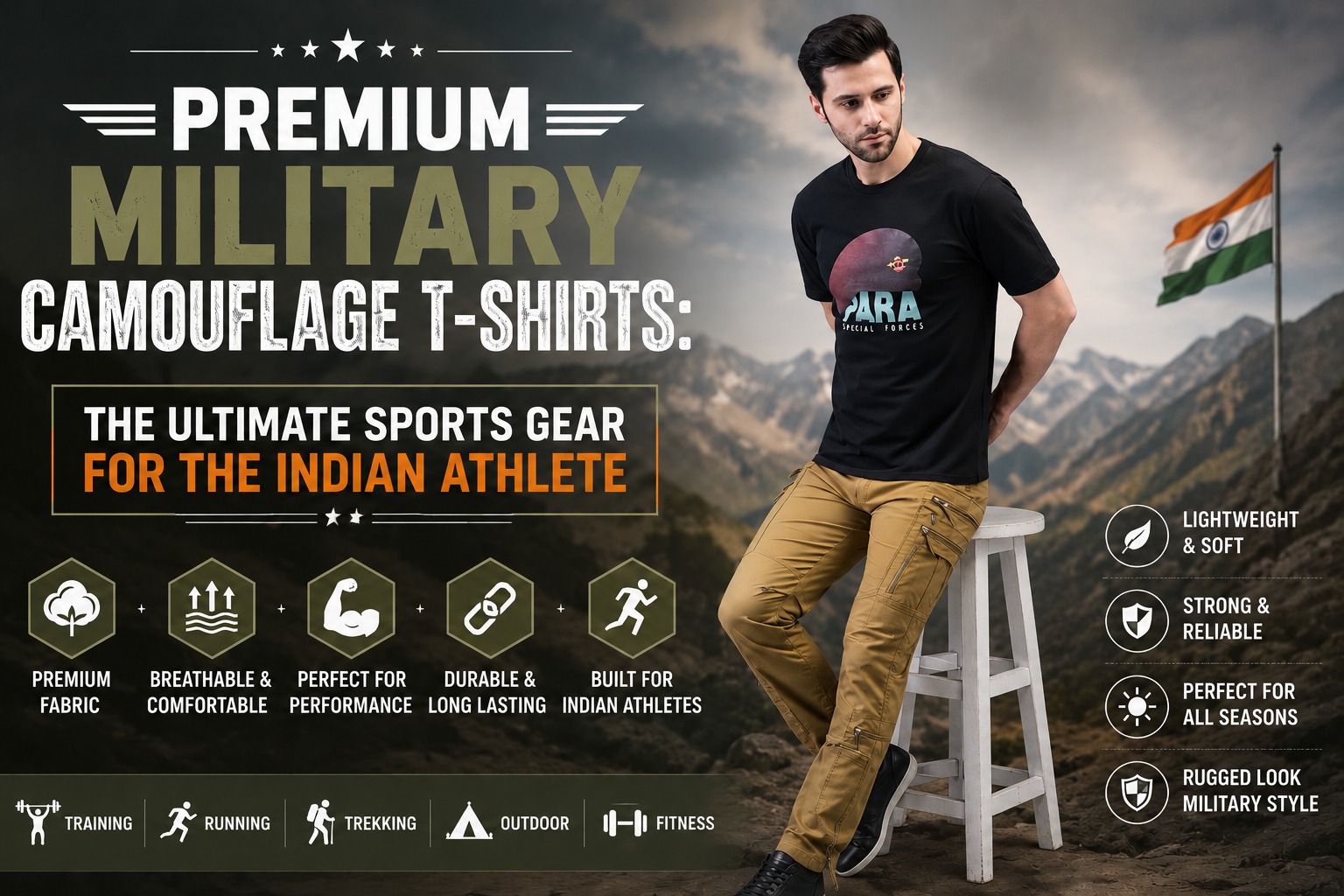
Tactical clothing stores specialize in producing apparel, which is based on designs from the military, outdoors, and utility lines such as cargo pants, tactical shirts, attachable pants, etc., but the products are created to be used for daily purposes, travels, outdoor activities, and not for professional or military use.
Let us define what tactical apparel is not since there is some confusion regarding that. Tactical apparel refers to commercial clothes, which utilize the design elements such as additional pockets, reinforced stitching, tough materials, which were initially created for military and law enforcement gear, but not to be used in a professional or military setting. The specialized protective gear or professional-grade equipment belongs to another line of products, which have their own standards and certifications, thus the commercial apparel brands should not claim that they produce gear to be used for law enforcement or military purposes.
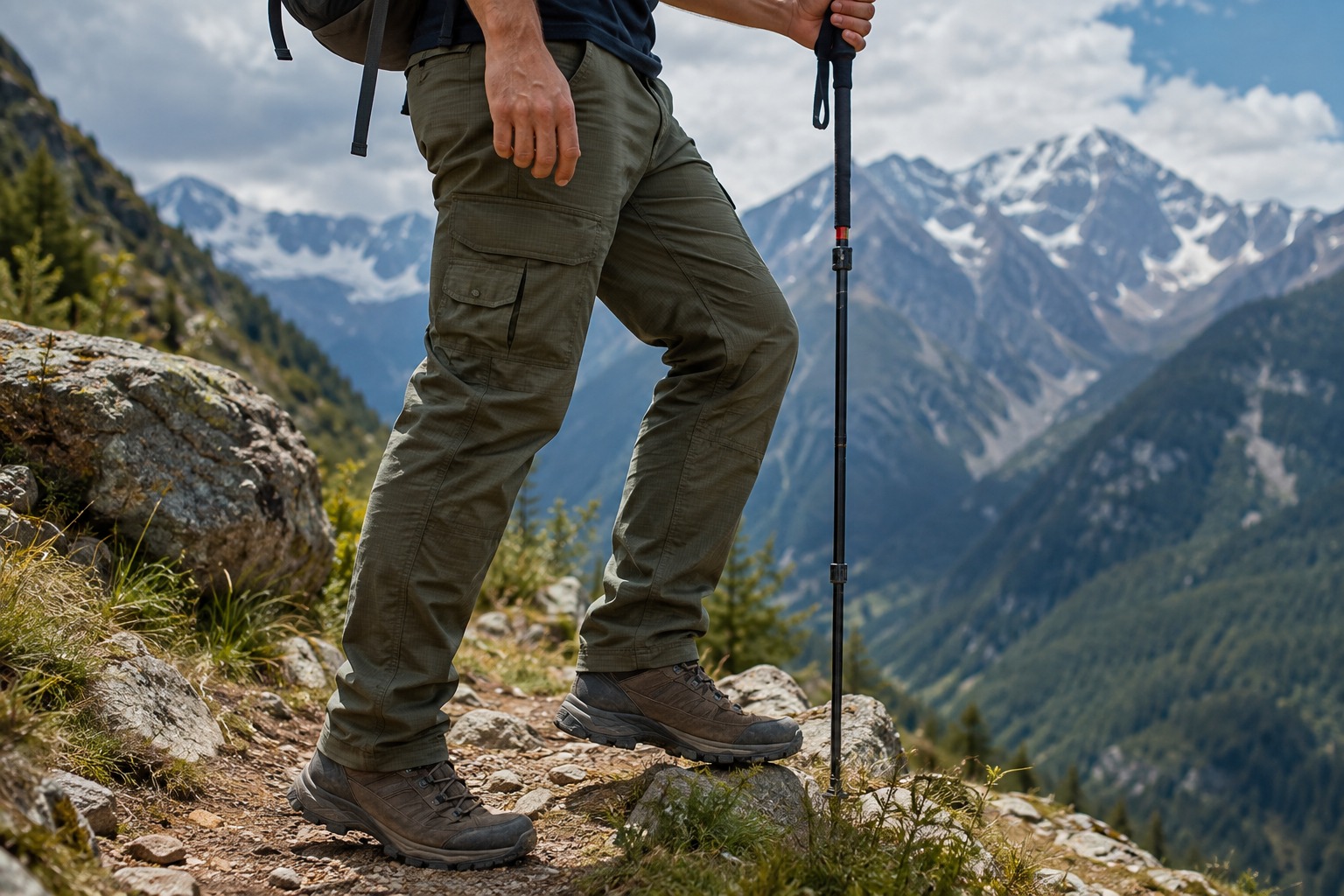
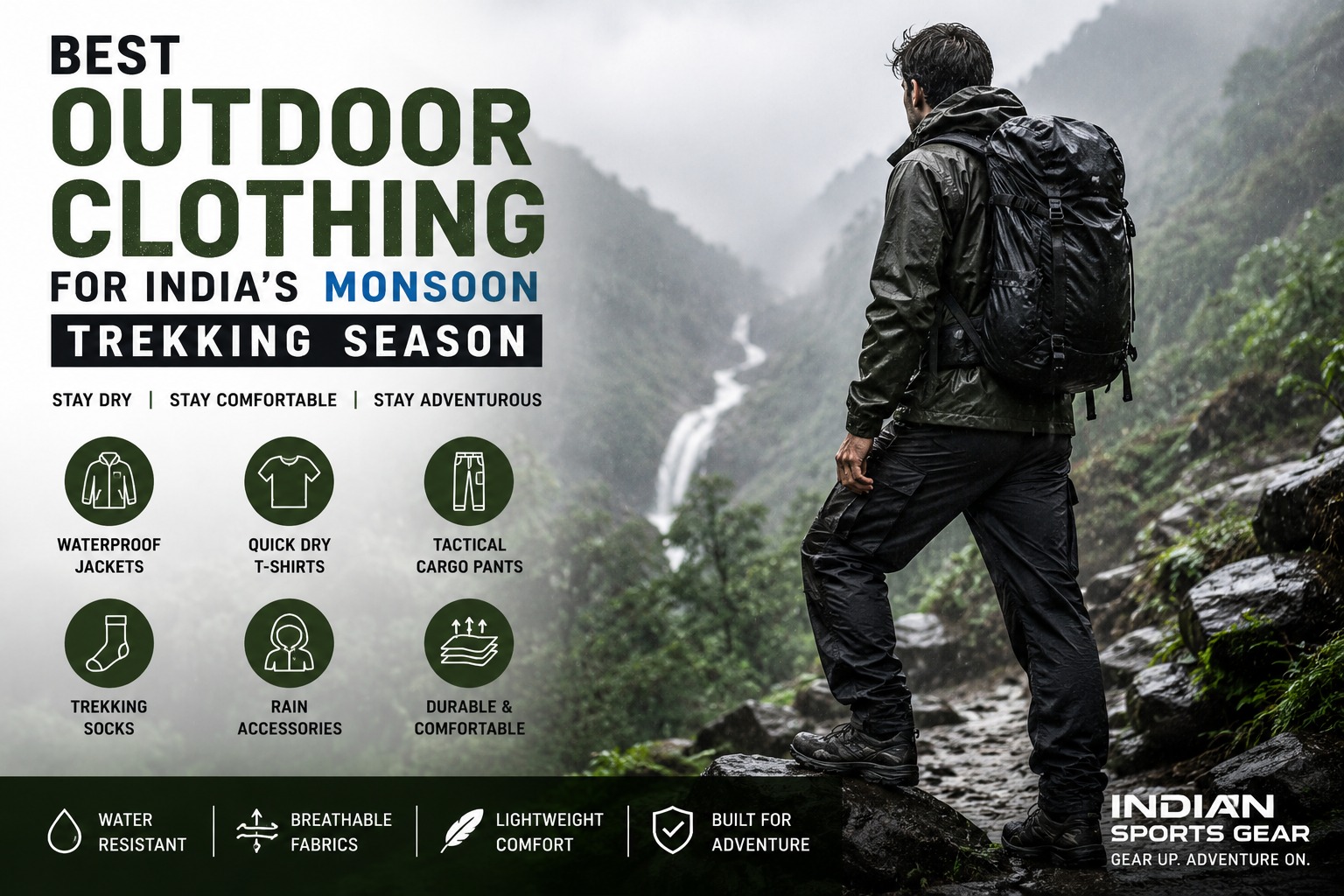
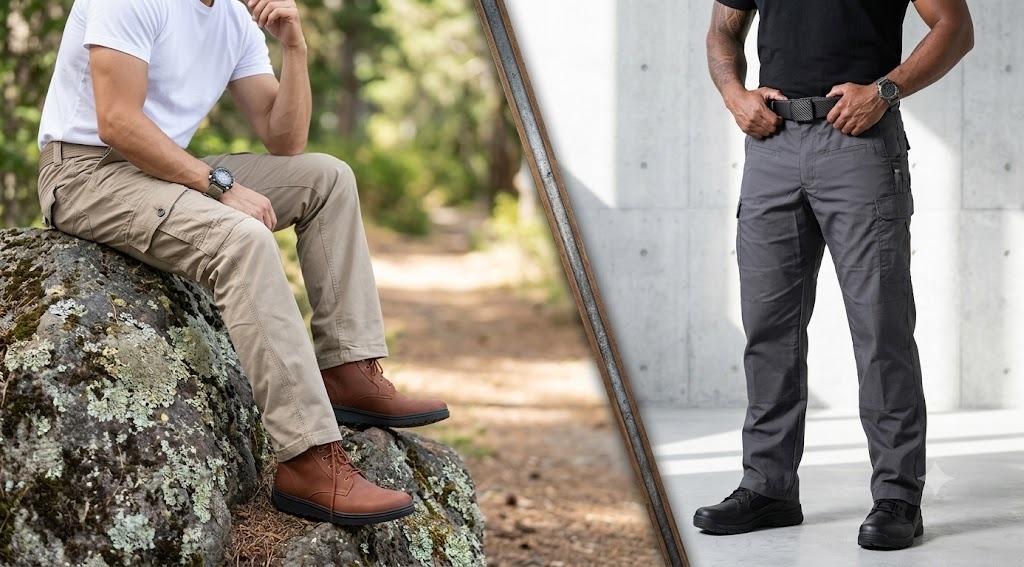
In real life, most tactical clothing stores in India offer items like cargo pants, utility shirts, tech T-shirts, light jackets, trekking pants, etc. Consumers are trekkers and people into outdoors, regular travelers and campers, who need durable daily wear, and fashionable customers, who love the utilitarian look, since cargo pants became popular in fashion lately.
Is Tactical Clothing a Good Business Opportunity in India?
However, there might be an opportunity in this market in India considering increasing interest in outdoor activities, functional fashion, and travel friendly clothes. There are several aspects that should not be overlooked despite the existence of the potential opportunity.
Firstly, the target customer base is really wide. Outdoor enthusiasts and trekkers need durable and fast drying clothing. Travelers want to buy versatile clothing like convertible or detachable pants. Campers and adventure sports enthusiasts have the same functional requirements. Fitness lovers and everyday customers like utility style of clothing regardless of whether it will be used for outdoors or not. Besides, sometimes there are people who prefer such clothing for safety or professional reasons, but selling to this type of customers requires proper product standards and legal procedures.
Secondly, it is necessary to discuss existing challenges. There is a lot of competition in the apparel market in India. Established brands and many direct-to-consumer companies appear. Ensuring proper quality and correct sizing is more complicated than it may seem. Sourcing manufacturing partner requires much time and a couple of failed attempts at least. Overordering is dangerous because it leads to tying up of capital while underordering means losing sales. It is also necessary to find the right pricing and to deal with return policy as in apparel sector it is very common. Building trust of customers as a new brand also takes time. All of this does not guarantee success or failure of the business.
Step-by-Step Guide to Starting a Tactical Clothing Business in India
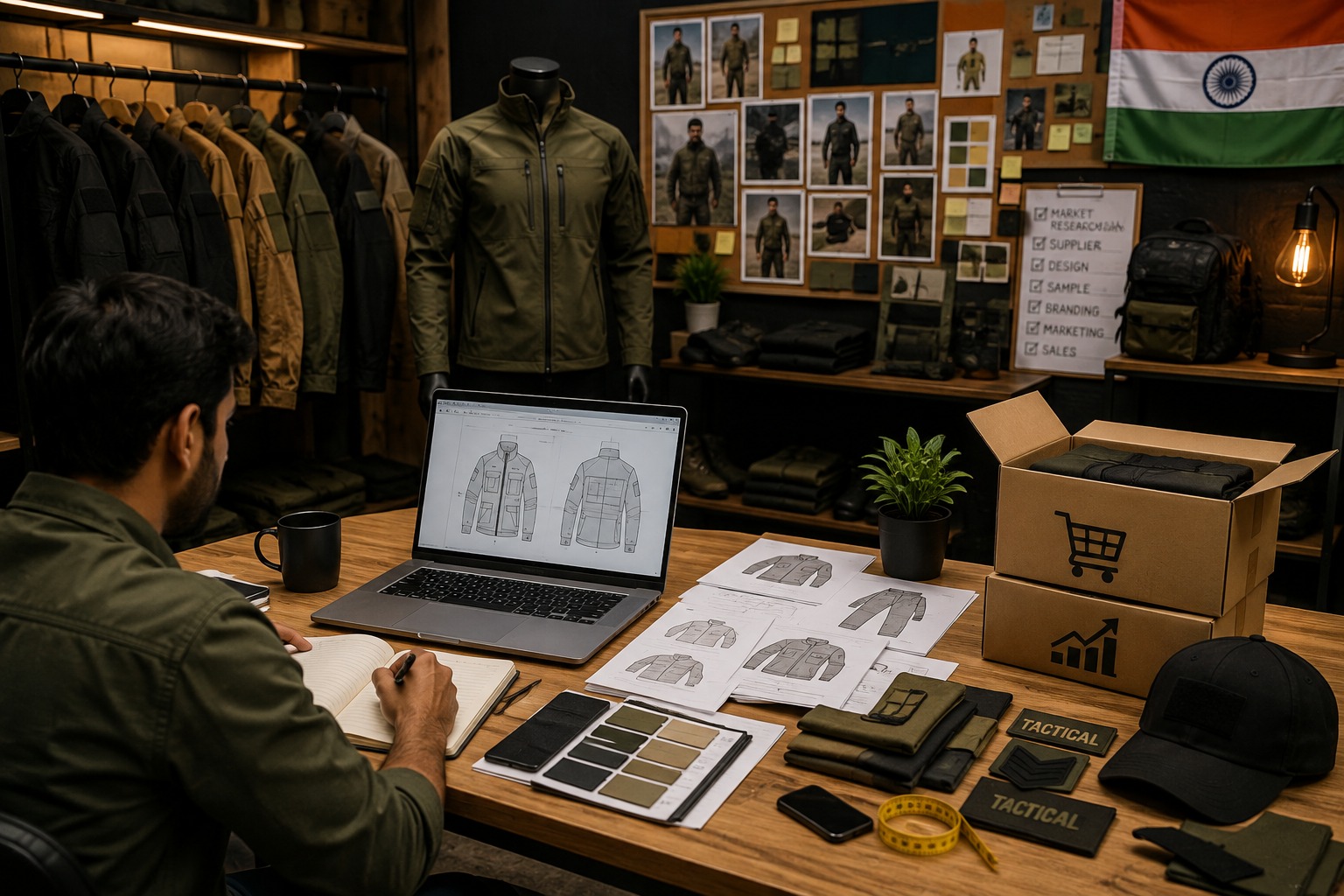
Research the Indian Tactical Clothing Market.
Prior to making investments in the inventory, spend some time researching what is already available and what is lacking in the existing market options. This will not require any costs on your part, as many studies can be conducted totally for free.
Start with studying the products that you intend to manufacture and source, as well as studying the product lines offered by your competitors: how they are priced, what type of product description they have written, and what their clients think about them. Customer reviews are especially important, as they show exactly what kind of issues customers experience with them: it could be size problems, use of low-quality materials, zippers breaking, and delayed shipping. Study the levels of search demand for different keywords related to your product types, with free tools like Google's autocomplete function and "People Also Ask" section. Analyze whether the current brands have a fashionable or practical approach, respectively.
Choose Your Tactical Clothing Niche.
Selecting one or two product lines rather than many at once can be more effective because it makes it possible to put all of your efforts into the process of purchasing, marketing, and quality control of several product lines at once.
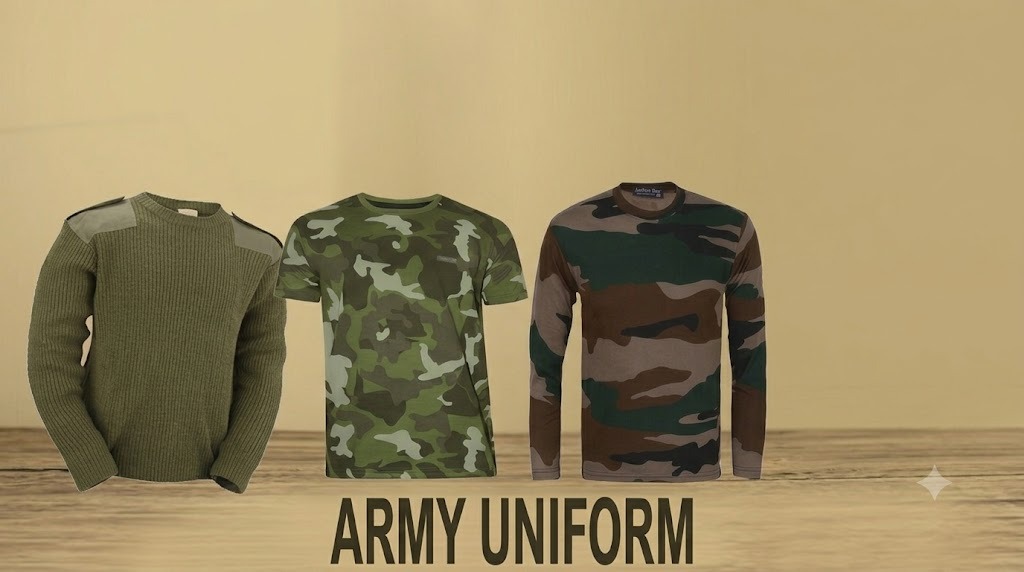
Niche segments of tactical and utilitarian clothes can include tactical cargo pants, zip-off cargo pants, utility shirts, tactical T-shirts, outdoor jackets, hiking and trekking clothes, travel clothes, military clothes, and general utilitarian outdoor clothing. It is easier to gain expertise in one type of clothing, learn how to fit it, and market it efficiently rather than invest in ten different product lines and implement each of them badly.
Decide Between Manufacturing, Wholesale and Private Label.
There are three broad approaches to sourcing tactical clothing, each with a different balance of investment, control, and risk.
| Factor | Own Manufacturing | Wholesale/Reselling | Private Label |
|---|---|---|---|
| Initial investment | High | Low to moderate | Moderate |
| Product control | Full control over design | Little to none | Moderate (customization within existing designs) |
| Customization | Complete | None | Limited (colors, labels, minor tweaks) |
| Typical MOQ | High | Low (buy as needed) | Moderate |
| Risk | Higher (design + production risk) | Lower | Moderate |
| Branding potential | Strong | Weak (generic products) | Good |
| Scalability | Slower to scale initially | Easy to scale quantity | Moderate, improves with volume |
By manufacturing your own goods, you will be able to exercise maximum control over the design but it will involve greater expense and skill as well as the capacity for iteration. Reselling wholesale goods and purchasing the goods that are ready for sale is the most straightforward way to begin but it may serve as a tool for testing the demand but it offers little distinction as there will be no distinction between your goods and those of other resellers. The use of private label concept seems to be the best compromise between the two.
Find a Reliable Tactical Clothing Manufacturer or Supplier in India.
When deciding which supplier to choose, make sure to look for the quality of the material, stitching, hardware (buttons, zippers, buckles), pocket construction, seam construction, and size uniformity within a batch of production, rather than solely focusing on price.
Make sure to ask for samples before ordering anything in bulk. Sample will show you more than the catalog or WhatsApp pictures could ever tell you: quality of the material, durability of the stitching, size accuracy, and overall product consistency with the description of the garment. Make sure to ask them about MOQs, production capacity and realistic lead times, packaging, customization options (label printing, color options, small design changes), and their quality assurance processes. The supplier that is unwilling to show you a sample, unsure of lead times and production capacity, or does not want to discuss the quality assurance process should be treated with skepticism.
Select the Right Fabrics and Product Features.
Cloth selection must be based on the functionality of the product because there is no such thing as the most perfect fabric for all features such as durability, breathability, elasticity, lightness, and adaptability to weather conditions.
Cotton is breathy and comfy but heavier, slower in drying, and more prone to wear than technical cloths – appropriate for casual and fashion pieces but not so much for outdoor products. Cotton-Lycra cloth is a blend of two materials where Lycra makes the cloth elastic and thus suitable for cargo pants for everyday wearing. Polyester and its blends are light, wrinkle-resistant and, on top of that, drier than cotton; they fit better into the category of performance products. Ripstop cloths are made with strengthening threads so as to prevent tearing and they are often used for truly outdoorsy products. Elastic cloth is made by adding some percent of elastane to another cloth to make it flexible enough to provide mobility for climbing and bending.
Create Your Tactical Clothing Brand.
A brand goes beyond logos. It is the name of your company together with its visual image, product positioning, packaging, photography, and ability to convey the unique value of your products through communication.
Think of the positioning of your brand in advance: will it be rugged-outdoor, urban-utility or something in-between? You will need to choose a name and a logo according to that positioning. You need to choose how your products will be positioned among competitors. Will you position them by price, design, functionality or will you focus on a certain target market? Packaging and unboxing play an important role for apparel products sold through online channels because it can be the only physical contact a potential customer has with your product. Invest in quality photography of your products: apparel products are highly visual and confusing, inconsistent photography is one of the top reasons why people refuse to buy things online. Write product descriptions which will provide answers to real questions like what fabric the product is made of, what its care instructions are, what size will it fit.
Understand Business Registration and Compliance in India.
The process of setting up a clothing business in India may include selecting the business entity type (SOLE PROPRIETORSHIP, PARTNERSHIP FIRM, LLP, or PRIVATE LIMITED COMPANY), registration of your company under GST if you are exceeding the threshold limit or selling products on any marketplace platform, and basic invoicing and product labeling rules.
Apart from these things, you may want to get your brand name and logo registered under a trademark when you are seriously planning to start your business. In case, if you are selling your products through any E-commerce platform or your own website, then there will be some other marketplace regulations that you should know, including things such as returns policy, grievance handling policy, and product description. Regulations are different according to your business structure, annual turnover, state where you operate, and B2B / B2C. So, instead of depending only on any single article for the same, I recommend checking your requirements based on your individual case through the official websites of government or by consulting a chartered accountant / company secretary.
Calculate Tactical Clothing Costs and Selling Price.
To determine a practical pricing strategy, first calculate all the costs involved in delivering the product to the buyer, add a sustainable margin to it, and only then consider competitors' pricing policies. In most cases, total cost involves the cost of goods or manufacture per unit, the cost of packaging materials, the cost of delivery and logistic service, payment or marketplace fees (if any), marketing budget allocation, provision for replacements (since it is typical for clothing products), and taxes. If the total cost of each unit is known, the selling price may be estimated in reverse order.
This example should be considered illustrative only and does not represent a real product market price. Assume that the manufacturing cost of the cargo pants is ₹450, packing cost is ₹30, the cost of delivery and logistic services is ₹60, and the marketing budget is ₹100 per each unit. In addition, we assume that there is a replacement risk of ₹50 per unit. So, the total hypothetical cost of each unit is ₹690. After this estimation, the product may be priced considering the actual cost and the margin of competitors' prices. Of course, these figures are completely hypothetical, since there are many factors which affect the total cost: fabric, manufacturer, order volume, etc.
Start Selling Tactical Clothing Online.
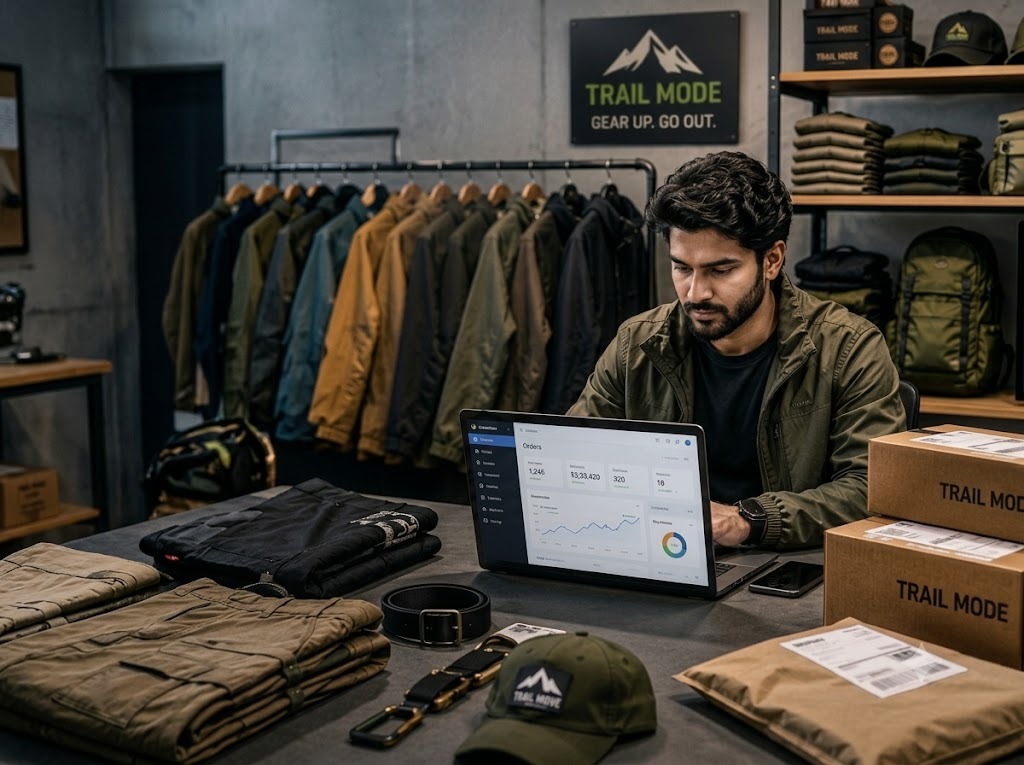
In most instances, when new apparel businesses enter the market in India, they do so using a combination of website sales, existing marketplaces, and social commerce channels, and each of these options comes with its own pros and cons.
A business' own website allows control over brand image, customer data, and pricing but necessitates the promotion of traffic via SEO, online advertising, and social media marketing. Major Indian e-commerce marketplaces provide customer traffic and built-in trust from consumers while also charging listing fees, commission fees, and providing less control over branding and customers. Social commerce through Instagram and other similar platforms can work well for visual and trend-based products and can help in building up a devoted fan base but usually does well to be paired with another sales channel instead of being the only one. WhatsApp Business is quite popular in India for customer confirmations, order confirmation, and customer service support and may even allow for sales and can be a cheap option for building loyal customers. B2B/wholesale sales can be done by either contacting the retailers and other resellers directly or using B2B marketplaces, and it usually requires other pricing and packaging.
Start Small and Validate Demand
Starting out with a concentrated range of products, two to five items usually, allows for a fast learning process without the risk of investing money in untested products.
After launching initial products, listen carefully to customer feedback, watch out for the number of returns of each particular item or size, and see what sells and what does not. The feedback collected must be used to determine what you will order next time, how you will modify your products, or what you will stop selling altogether. Firms operating in the apparel industry tend to neglect this step of product validation and move on straight to ordering large amounts of inventory, thus risking being stuck with non-selling products, a common problem among startups in the field.
How Much Does It Cost to Start a Tactical Clothing Business in India?
There is no exact number one can refer to when talking about the amount of money required to establish a tactical clothing business in India, as this amount will greatly depend on the specific business model you choose (whether it is going to be based on reselling wholesale or private label clothes, manufacturing, etc.) and other factors like the size of your inventory, cost of web design, packaging and marketing.
Here we can mention several broad options that may be helpful in understanding the possible cost structure of launching a business in question:
Test Product Line Launch: limited range of products (one or two dozen SKUs only), small inventory purchase from a wholesaler or a private label vendor (MOQ), light investments in packaging and photography and a very small marketing budget (possibly no budget at all). This option allows focusing on the learning process.
Developing an Online Clothing Brand: somewhat wider range of products, branded website, better packaging and photography, marketing budget and inventory purchases in somewhat larger amounts than in case of test launch once some products have proven their demand.
Developing a Clothes Brand: larger range of products, possibly developing a manufacturing capacity or working with the private label vendor in a more intensive way, investing into branding and photography and a more sophisticated marketing strategy and inventory planning.
Since exact costs can vary depending on fabric prices, relations with manufacturers and many other factors, it is advisable to calculate your own costs based on the costs components mentioned above. [SOURCE NEEDED: current startup cost ranges for clothes brands in India]
Common Mistakes to Avoid When Starting a Tactical Clothing Business
Too much inventory upfront will result in having to invest capital in products that aren't proven and needing to discount them prematurely. Supplier selection based only on price often ends up leading to lower-quality items, missed deadlines, and additional expenses down the road. Not taking samples of your inventory before ordering a large amount results in finding out about issues in fabric, stitching, or sizing of products once a couple hundred pieces of clothes are already manufactured. Lack of size consistency in a batch of production results in regular returns of items, regardless of how good your base product is.
Copycat products are likely to be unable to establish an identifiable trademark and might end up getting into trouble with your intellectual property rights. Poor photos are among the main (and easily remedied) reasons customers hold back on apparel purchasing from websites. Poor description of the item that leaves out all the key information about its size, fit, and material is also among the most prevalent mistakes made in online apparel shopping. Neglecting customer reviews in case they are bad is also a loss of valuable feedback for no extra cost to a small business.
One of the main oversights of those just starting in apparel e-commerce is underestimating the number of returns that will be made, since returns in this category of products are a given, not a problem. Spending too much money on advertising before testing the performance of your product is also a costly error for many businesses.
Frequently Asked Questions
Q. How can I start a tactical clothing business in India?
The process starts with market research, competitor analysis, selection of a product niche, and choosing whether you will manufacture, wholesale, or go for private labeling. Then, you find the supplier, select the fabric for your clothes, create a simple brand, make all necessary registrations, and start with a small product line.
Q. Is tactical clothing profitable in India?
There is a demand among trekkers, travelers, and fashionistas, which can bring a good profit to this business, although there is no guarantee of profitability depending on your costs, competition, price strategy, and your ability to execute the idea. Just as any clothing line, tactical wear business will require handling returns, inventory, and efficient marketing.
Q. How much money is needed to start a tactical clothing business?
There is no specific sum, as it depends on whether you start small selling wholesale products, switch to private labeling, or produce the goods yourself. A small test run with a limited number of products and organic marketing is significantly cheaper than a full-fledged brand with custom production and paid promotion.
Q. Where can I find tactical clothing manufacturers in India?
Suppliers of your tactical clothing can be found with the help of various B2B websites, information about apparel manufacturing and trade, directories, and direct contact with garment manufacturers who specialize in cargo pants, utility wear, or other categories of tactical clothing. Always ask for samples and quality check.
Q. What products should I sell in my tactical clothing business?
Examples of products that you may sell in your tactical clothing business are tactical or cargo pants, pants with detachable features, utility shirts, technical T-shirts, and lightweight jackets for outdoors. Starting with a couple of focused products is much easier than opening a large variety of products from scratch.
Q. Can I start a tactical clothing business online?
Many tactical and outdoor clothing lines in India have an exclusively online business model using their websites, marketplaces, and social commerce platforms like Instagram and WhatsApp Business for marketing without the need for having the stores.
Q. Is private labeling suitable for my tactical clothing business?
Private labeling is a decent option for a young brand because it gives you a nice compromise between resale and the need for expensive manufacturing as it gives the ability to brand and customize your products without the need for.